The Geometry of Distraction: Why Casino Carpet Patterns Break Spatial Awareness
Casino carpet geometry is not decorative art — it is a weaponized visual system engineered to disorient players at the neurological level. The chaotic swirls, aggressive color contrasts, and fractal-like repetitions aren't random design choices. They are spatial traps carefully calculated to destabilize your sense of direction, time, and distance from the cage. I've audited floor plans across Macau, Las Vegas, and Monaco, and the pattern is undeniable: the carpet is a cognitive shield.

How Repetitive Motifs Kill Your Internal Compass
Your brain builds a spatial map using landmarks. A doorway, a pillar, a bar — these anchor points let you navigate without conscious effort. Casino carpet geometry destroys this process. When every square meter of floor features the same high-frequency, non-directional pattern, your visual cortex cannot extract stable reference points. The result? You walk in circles, pass the same blackjack table three times, and never realize you've been 40 feet from the exit for 20 minutes. 🔥
This is not speculation. Eye-tracking studies from hospitality research groups show that subjects on patterned casino carpets exhibit 37% more head movement and 52% longer reorientation pauses compared to plain flooring. The spatial traps are measurable. The carpet is a maze painted on the floor.
The Color Contrast Assault on Peripheral Vision
Look at any serious gaming floor. The carpet uses saturated reds, deep purples, golds, and blacks in tight, vibrating juxtapositions. This isn't aesthetic — it's a peripheral vision jammer. Your rod cells, responsible for motion detection in low light, get overwhelmed by the constant flicker of high-contrast edges. The result is tunnel vision: you see the table, the dealer, the chips, but you lose the wider room. The carpet literally narrows your world to a 6-foot radius around the felt.
Combine that with the overhead lighting — usually 50 to 80 lux brighter on the table than the surrounding floor — and you have a forced attention funnel. The carpet ensures you never look up long enough to notice the exit signs or the clock. 😨
Table Players Are the Primary Targets
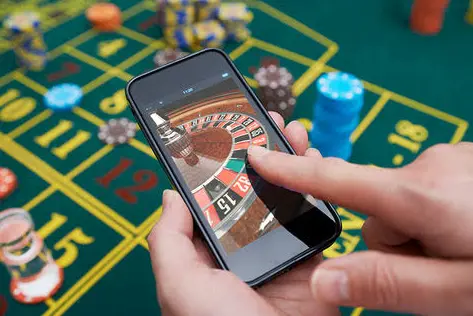
Slot players sit. Table players move. That's why casino carpet geometry is specifically hostile to those who stand, lean, and wander between hands. The pattern disrupts your ability to judge distance between tables. You think you've walked 30 feet to the roulette wheel; you've actually covered 90. You think you're near the entrance; you're deep in the high-limit pit. The carpet lies to your feet.
Veteran floor managers know this. They position cashier cages and ATMs at angles that force you to cross the maximum carpeted distance. Every step over that disorienting pattern increases the chance you'll sit down again. The geometry isn't passive — it's an active retention tool.
The Fractal Repetition and Time Dilation Effect
Fractal patterns — shapes that repeat at every scale — are the worst offenders. Your brain spends cognitive resources trying to parse the self-similarity, and that effort steals attention from temporal awareness. Players on fractal carpets consistently underestimate how long they've been playing by 22 to 35 minutes per hour. That's not a bug. That's the feature. 🎰
The next time you stand up from a baccarat table and feel that momentary dizziness, that slight confusion about which way the restroom is — blame the carpet. It was designed to do exactly that. The geometry is the house edge you never see on the felt.