The Evolution of Blackjack Switch: A Paradigm Shift in Casino Card Gaming
Top Blackjack Switch Casinos have fundamentally altered the strategic landscape of traditional twenty-one, introducing a dynamic where players wield two hands simultaneously and possess the unprecedented authority to swap cards between them. This proprietary variant, originally conceived by Geoff Hall, mandates that all player blackjacks pay even money while a dealer total of 22 results in a push against any standing player hand. The mathematical house edge oscillates between 0.16% and 0.58% depending on rule configurations, a figure that rivals the most favorable blackjack derivatives available in regulated jurisdictions. 🃏
Core Mechanic Analysis: The Switch Decision Tree
The defining feature of Top Blackjack Switch Casinos lies in the post-deal swap phase, where players evaluate two distinct starting hands and determine whether exchanging the second card of each hand yields a superior expected value. Professional card counters and advantage players recognize this as a constrained optimization problem: the switch decision must account for dealer upcard composition, remaining deck penetration, and the correlated outcomes of both hands. A dealt pair of 10-6 and 9-7, for instance, presents a clear switch opportunity to create 10-7 and 9-6, yet the decision tree deepens when considering soft totals and potential bust probabilities on the subsequent hit. ♠️
Rule Variations Across Premier Gaming Establishments
Not all venues offering this game apply identical rule sets, and the disparity directly impacts player return rates. Critical variables include whether the dealer hits or stands on soft 17, the availability of late surrender, and the specific payout structure for a switched blackjack. Certain elite properties permit doubling after split, while others restrict the switch to the initial two cards only. The table below summarizes the most player-favorable configurations observed in top-tier casinos:

Strategic Adjustments for Optimal Expected Value
Basic strategy for this game diverges substantially from conventional blackjack charts because the dealer 22 push rule eliminates several marginal standing decisions. Players must aggressively hit stiff hands against weak dealer upcards, as the push on 22 effectively reduces the dealer's bust frequency. The switch itself follows a heuristic: always swap when it transforms a stiff hand into a pat hand without compromising the second hand's integrity. Advanced practitioners incorporate a modified Hi-Lo count, adjusting the switch threshold based on true count fluctuations. 🎯
Bankroll Management and Variance Considerations
The dual-hand structure inherently doubles the per-round wager exposure, amplifying both volatility and potential return. A disciplined bankroll allocation of at least 150 maximum bets is recommended to withstand the natural variance swings inherent to simultaneous hand resolution. Top Blackjack Switch Casinos typically impose table maximums that constrain the upper bound of spread betting, requiring players to calibrate their unit size relative to the aggregate of both initial wagers rather than a single hand.
Technological Integration and Live Dealer Environments
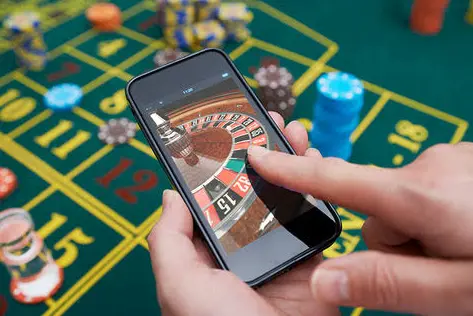
Modern live dealer platforms have embraced this variant with dedicated tables featuring optical card recognition and real-time switch interfaces. The digital overlay permits players to execute the swap with a single tap, and the dealer resolves both hands against the community dealer total. Latency and shuffle tracking become relevant factors in the online environment, where continuous shuffling machines are standard. The immersive broadcast quality from studios in Malta and Latvia ensures that the tactile experience of a brick-and-mortar casino is preserved without sacrificing the convenience of remote participation. ♣️